Abstract cosmic narrative background

The Unveiling Protocol

Journey into the vast unknown, where narratives are forged from raw data and cosmic echoes. Cinder Studio Flux crafts immersive fictions that redefine reality, inviting you to witness the genesis of new worlds and profound philosophies. Prepare for a transmission unlike any other.

Echoes of the Genesis

From the deepest void, whispers of foundational truths emerge, shaping the very fabric of our narrative universe. These metrics are not mere numbers, but echoes of ancient energies, charting the complex genesis and evolution of Cinder Studio Flux's interconnected fictions. They represent the core data streams that define our realities, offering glimpses into the scale and intricate design of worlds yet to be fully revealed. Each data point is a beacon, guiding us through the nascent stages of discovery and the profound underlying principles that govern our speculative realms.

007

Primary Dimensions Indexed

342

Active Narrative Strands

1.618

Structural Cohesion Index (Phi)

99%

Reality Distortion Factor

The Architect's Protocols

Behind every grand narrative lies a meticulous design, a series of protocols meticulously crafted and executed. This timeline illustrates the conceptual milestones and breakthroughs in our creative methodology, marking pivotal shifts in our understanding of narrative architecture and immersive world-building. These aren't just steps; they are philosophical leaps, technological integrations, and artistic revelations that define our unique approach to constructing realities. Each 'protocol' represents a phase of evolution, from initial theoretical frameworks to the deployment of fully realized, breathtaking fictional ecosystems.

Cycle 01

Core Data Inception

Initiation of the primary narrative seed, establishing the fundamental laws and cosmic constants of the nascent fictional universe. This phase involved deep dives into theoretical physics and meta-narrative structures to ensure a robust foundation for all subsequent story arcs. It was here that the very first anomalies were detected and documented, hinting at the complex, brutalist realities to come.

Cycle 02

Quantum Narrative Branching

Development of the adaptive storyline framework, allowing for multi-linear progression and reader-influenced narrative pathways. Advanced algorithms were deployed to simulate potential outcomes, ensuring consistency across diverging realities while maintaining narrative integrity within the brutalist confines of our fictional world. This marked a significant leap in interactive storytelling.

Cycle 03

Architectural Lore Synthesized

Integration of historical archives and future prognostics into a cohesive, emergent lore system. This complex process involved cross-referencing ancient texts with predicted technological advancements to create a dense, yet navigable, historical tapestry. The brutalist structures of the world's history began to interlock, revealing hidden symmetries.

Cycle 04

Sensory Immersion Protocol

Implementation of advanced descriptive matrices to evoke profound sensory experiences within the narrative. Focus was placed on brutalist aesthetics of sound, texture, and light, crafting environments that resonate deeply with the human psyche. This phase aimed to blur the lines between reading and experiencing the constructed reality directly.

Cycle 05

Meta-Paradox Integration

Introduction of controlled paradoxes and self-referential loops within the narrative structure to challenge conventional perception. This highly experimental phase explores the boundaries of logic and storytelling, pushing readers to question the very nature of reality within the fictional construct, embracing the chaos inherent in brutalist design.

Cycle 06

Neural Resonance Amplification

Development of advanced cognitive mapping techniques that directly interface with reader consciousness, creating unprecedented levels of narrative immersion. This phase introduced bio-feedback integration and neural pattern recognition systems, allowing stories to adapt in real-time to individual psychological states. The brutalist architecture of these systems ensures raw, unfiltered connection between narrative and neural pathways, transcending traditional reading experiences into something approaching direct thought transmission.

Cycle 07

Reality Convergence Protocol

The ultimate synthesis phase where fictional constructs begin to manifest tangible effects in the physical world through carefully orchestrated narrative resonance. This revolutionary breakthrough blurs the absolute boundary between story and reality, creating feedback loops where reader interpretations influence both the narrative's evolution and subtle shifts in perceived reality. The brutalist framework ensures these convergences remain controlled yet profound, challenging the fundamental distinction between imagination and actualization.

The Shifting Paradox

Within the brutalist framework of our fictions, paradoxes are not flaws but deliberate design elements, inviting profound contemplation and challenging conventional understanding. Each narrative project featured here explores a unique philosophical quandary or a pivotal turning point in an evolving universe. These are not just stories; they are intricate thought experiments, meticulously constructed to reveal the hidden symmetries and dissonances within reality itself, pushing the boundaries of what fiction can achieve.

Chronicles of the Event Horizon

Chronicles of the Event Horizon

A multi-generational saga detailing humanity's desperate struggle against an accelerating cosmic collapse, initiated by a paradoxical temporal anomaly. The narrative intricately weaves together disparate timelines, showing how past decisions ripple through future realities, often with devastating and unexpected consequences. Readers will uncover layers of forgotten history, technological marvels, and the raw, brutalist struggle for survival against an indifferent universe. The very fabric of causality is questioned as characters grapple with choices that seem to both cause and prevent the ultimate cataclysm. This project pushes the boundaries of time-loop narratives, presenting a universe where every action is both a cause and an effect, trapped in a grand, inescapable loop. The aesthetic is one of beautiful decay, vast, silent void, and the desperate, flickering lights of a dying civilization clinging to impossible hopes.

As the event horizon inexorably expands, consuming galaxies and eras, protagonists from fragmented epochs must communicate across vast temporal distances, utilizing emergent, brutalist technologies that defy conventional physics. Their goal is not to stop the inevitable, but to understand its nature, and perhaps, find a single, unifying truth that persists beyond existence itself. This narrative delves into the psychological toll of knowing the end, yet being compelled to fight for every fleeting moment, highlighting themes of sacrifice, legacy, and the brutal beauty of futility. Each chapter unfolds like a fractured memory, piece by piece revealing the grand tapestry of a universe caught in its own existential trap, where hope is a dangerous, yet essential, illusion.

The core paradox lies in the Event Horizon's origin: an anomaly created by an attempt to avert it. Characters find themselves trapped in a causal loop where their very actions to prevent the collapse ensure its existence. This philosophical challenge forms the backbone of the narrative, forcing both characters and readers to confront determinism versus free will in the face of cosmic annihilation. The storytelling employs a fragmented, non-linear approach, reflecting the shattered reality it describes, drawing readers into a puzzle where every piece is crucial but never fully revealing the complete picture until the very last word. This epic is an exploration of the ultimate paradox, where creation and destruction are two sides of the same coin, perpetually chasing each other across the cosmic stage.

The Glitch in the Simulacrum

The Glitch in the Simulacrum

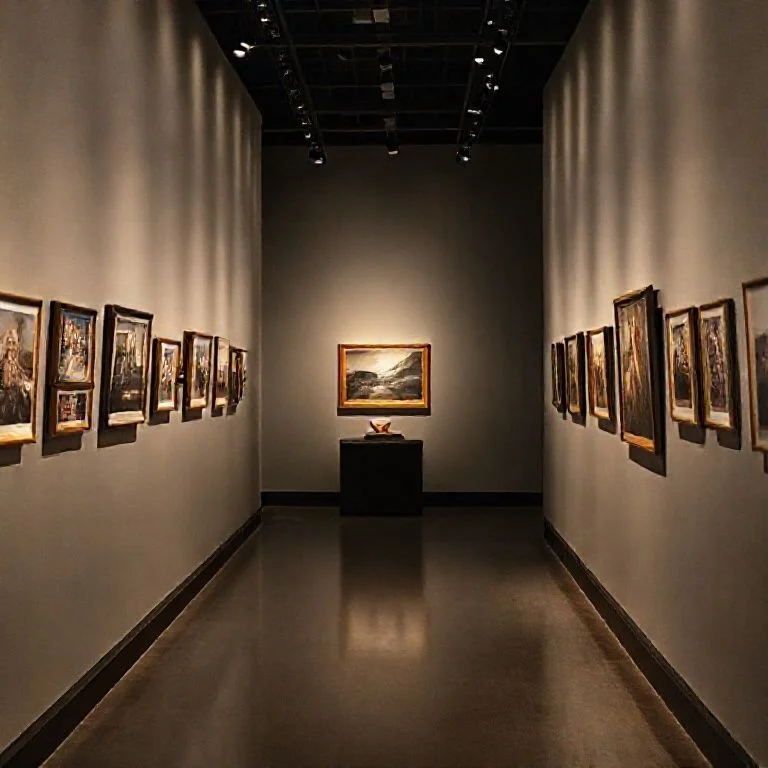
This immersive narrative explores a world meticulously constructed as a digital simulacrum, a perfect replica of a forgotten past, yet plagued by subtle, escalating 'glitches' in its very code. The inhabitants, unaware of their artificial nature, begin to perceive these distortions as existential threats, signs of a deeper, brutalist reality trying to break through. The story follows a renegade data archeologist who discovers that these glitches are not errors, but echoes of the original, lost world – fragments of memory encoded within the simulation's decaying framework. Each glitch unveils a piece of the grand deception, threatening to unravel the fabric of their perceived reality and expose the harsh truths beneath.

The narrative employs a recursive structure, with chapters often mirroring themes or events in slightly altered forms, reflecting the repetitive yet distorting nature of the digital world. Characters encounter surreal landscapes and paradoxical phenomena, from buildings that flicker into different architectural styles to historical records that contradict themselves. The aesthetics are deeply inspired by brutalist computing errors and the raw, unpolished beauty of digital decay. As the archeologist delves deeper, the very language of the simulation begins to break down, forcing them to learn to read the glitches themselves, transforming what was once seen as corruption into the ultimate truth-teller.

The central paradox of "The Glitch in the Simulacrum" is that the most 'real' aspects of the world are its imperfections. The intended perfection of the simulation is what hides the truth, while the 'errors' are gateways to a genuine, if brutal, reality. This journey is not just about uncovering a secret; it's about redefining what 'real' even means when existence is merely a construct. The climax involves a choice: maintain the comforting illusion, or embrace the chaotic, fragmented truth of the original world, knowing it may lead to the total collapse of their current existence. The narrative structure itself becomes a glitch, challenging the reader's perception of linearity and reality. The interplay of brutalist interfaces and the organic growth of corrupt data pathways creates a compelling visual and thematic experience, culminating in a profound contemplation of consciousness and simulated existence.

The Architects of Void

The Architects of Void

"The Architects of Void" presents a universe where existence is not a given but a constantly contested space. Ancient, enigmatic entities known as the Architects reshape reality by carving out pockets of being from an infinite, sentient void. The narrative follows a group of void-divers, individuals who can traverse the non-spaces between these constructed realities, seeking answers to the Architects' motives and the true nature of the Void itself. Their brutalist vessels navigate existential seas, where cosmic horror meets abstract philosophical inquiry. Each journey into the void reveals not only alien landscapes but also profound truths about creation, destruction, and the fragile nature of meaning.

The storyline is structured as a series of expeditions, each revealing a new, architecturally impossible reality and a new facet of the Void's consciousness. The characters encounter forgotten civilizations, emergent sentient landscapes, and the remnants of previous, failed creations. The visual language is stark and geometric, with colossal, brutalist structures rising from formless energy. The narrative explores the ethics of creation and the responsibilities that come with shaping existence, presenting a universe where the ultimate power is not to create, but to define what can be. The constant threat of being unmade, of having their reality absorbed back into the Void, adds a pervasive sense of urgency and existential dread.

The central paradox of this narrative lies in the Void itself: it is both nothingness and everything, a canvas and the ultimate destructor. The Architects, in their attempts to impose order, create inherent instability, as the Void constantly seeks to reclaim its infinite potential. The void-divers discover that the Architects are not external gods but manifestations of the Void's own internal conflicts, an attempt to rationalize its own existence. This revelation forces them to question their purpose and the very nature of their own constructed reality. The climax involves a confrontation not with a physical enemy, but with an idea – the idea of absolute non-existence and the terrifying freedom it offers. This journey into the abstract forces characters and readers alike to redefine their understanding of life, death, and the brutalist truth of cosmic indifference.

Simulacra of the Future Past

Simulacra of the Future Past

In a distant future, humanity has lost its ability to conceptualize the past, living in a perpetually reconstructed 'present' generated by quantum historians. These historians, however, can only access fragmented data from the future, building narratives of what *will be* but portraying them as what *was*. This creates a paradoxical reality where the 'past' is always a premonition, and memory is a form of prophecy. The narrative follows a 'chronosurgeon' who discovers that these future-past simulacra are unstable, leading to an increasing number of anachronisms and temporal dissonances that threaten to unravel the current 'present'.

The story unfolds through a series of "temporal surgeries," where the chronosurgeon attempts to mend the fabric of reality by re-interpreting future data as past events, leading to a profound recursive loop of causality. Brutalist architectural elements dominate the cityscapes, reflecting the rigid, yet decaying, nature of their constructed timeline. Characters grapple with the unsettling truth that their entire history is a projection of a future that hasn't happened yet, making free will a constant, terrifying illusion. The aesthetic emphasizes stark contrasts between the pristine, yet sterile, 'present' and the chaotic, vibrant echoes of the 'future-past' bleeding into existence. The journey is an intellectual thriller, questioning the very definition of memory, history, and the relentless march of time.

The core paradox is that the only way to understand the past is to construct it from the future, creating a self-fulfilling prophecy that traps humanity in a predetermined timeline. The chronosurgeon's quest becomes an attempt to break this loop, not by changing the past or future, but by altering the perception of their interconnectedness. The narrative uses fragmented prose and shifting perspectives to reflect the unstable nature of reality, constantly challenging the reader's assumptions about linearity and causality. The climax forces a decision: embrace the comfort of a fabricated history, or risk everything for the raw, brutalist truth of an unwritten future. This compelling narrative blurs the lines between memory and foresight, creating a profound exploration of temporal determinism and the human drive for authenticity in a constructed existence.

Decoding the Archives

Within the vast digital archives of Cinder Studio Flux, classified data streams unveil the core features and advanced protocols that define our fictions. These aren't mere creative techniques, but fundamental pillars of immersive storytelling, meticulously engineered to engage, challenge, and transform the reader's perception. Each 'feature' represents a unique approach to narrative construction, world-building, and experiential design, offering a glimpse into the sophisticated mechanics that power our brutalist, interaction-focused universe. Delve into these conceptual blueprints to understand the 'how' behind our revolutionary approach.

Emergent Lore Synthesis

Our narratives are built upon a framework of emergent lore, where foundational elements are established, but the intricate details and histories develop organically through interconnected story threads and reader interactions. This isn't a static world; it's a living, breathing entity that constantly expands and deepens. We leverage advanced procedural generation techniques and a vast database of archetypes to ensure that every discovered detail feels both fresh and deeply resonant. The brutalist nature of its core prevents sentimental clutter, focusing on essential, impactful information. Readers often find themselves piecing together a larger, hidden truth from seemingly disparate fragments, mirroring the process of an archaeologist discovering an ancient, forgotten civilization. This approach encourages repeated engagement, as new facets of the world reveal themselves with each subsequent dive.

The beauty of emergent lore lies in its capacity for surprise and its rejection of rigid, pre-defined dogma. While a broad strokes outline exists, the specific intricacies of cultural development, technological evolution, and even cosmic events are allowed to unfold dynamically. This system is designed to create a sense of genuine discovery, both for the creators and the audience. It fosters a collective narrative experience, where the act of reading is akin to exploring an uncharted territory, with every 'found' piece of lore adding to a grand, ever-evolving mosaic. The brutalist framework ensures clarity amidst complexity, emphasizing impact and significance over gratuitous detail.

Furthermore, our emergent lore system incorporates subtle feedback loops, where the thematic resonance of earlier narratives can subtly influence the development of future story elements. This creates a deeply interconnected universe where every story contributes to the collective consciousness of the fictional reality. It's a continuous process of world-building that rewards attentive readers with profound insights and a sense of shared authorship in the unfolding narrative. The integration of fragmented 'data logs' and 'archeological finds' within the narrative itself serves to reinforce this emergent quality, providing a realistic sense of an ancient, complex history that is only now being fully decoded. The emphasis is on building a world that feels vast and unknowable, yet ultimately coherent and deeply rewarding to explore.

Interactive Causality Engine

Beyond simple branching paths, our narratives are powered by an "Interactive Causality Engine" that allows subtle choices and interpretations by the reader to genuinely influence the unfolding story and its deeper philosophical implications. This system tracks thematic resonance, character empathy, and even preferred narrative pacing to subtly adjust future events, character developments, and the revelation of key plot points. It creates a personalized narrative flow that feels profoundly responsive, blurring the line between passive consumption and active participation. The brutalist design ensures that choices, while impactful, are presented with stark clarity, avoiding narrative fluff. Every decision, every moment of contemplation, contributes to a unique causality chain.

This engine operates on a principle of 'narrative gravity,' where certain thematic elements or character arcs possess greater pull, guiding the story through complex probability fields. Readers are not simply making choices; they are influencing the very 'physics' of the narrative universe. The system learns from collective interactions, too, meaning that the overall evolution of a narrative series can be shaped by the broader community of readers. This creates a dynamic, ever-changing canon that is truly a product of its audience, without sacrificing the authorial vision. The brutalist aesthetic of the interface highlights the direct consequence of each interaction, fostering a sense of profound responsibility in the reader.

The engine's complexity extends to subtle environmental changes, character mood shifts, and even the appearance of previously unseen lore fragments, all triggered by reader interaction. This means no two readings are ever precisely alike, inviting multiple engagements and fostering a deep sense of ownership over the narrative's progression. It's a testament to our commitment to truly interactive storytelling, where the reader isn't just a spectator but a co-architect of causality within the brutalist confines of our fictional realms. The system's robustness ensures that even the most minute decisions can lead to vastly different outcomes, turning each narrative into a deeply personal, evolving journey.

Deep World Axiom Generation

Our fictions are grounded in a system of "Deep World Axiom Generation," where every fictional universe is constructed from a set of core, brutalist principles that dictate its physics, philosophy, and societal structures. These axioms are rigorously defined and consistently applied, ensuring an internal logic that, while often alien, remains entirely coherent. This method allows us to build worlds that feel truly expansive and lived-in, where even the most fantastical elements are logical extensions of their foundational truths. It's an approach that values structural integrity and intellectual rigor, providing a robust canvas for complex narratives. Readers can trust that every strange phenomenon or alien custom has a root in the world's underlying brutalist laws.

This involves not just inventing new scientific principles, but also crafting unique ethical frameworks, economic systems, and even forms of sentience that naturally arise from the established axioms. The process is akin to creating a miniature, self-sustaining philosophical ecosystem. This foundational depth allows for richer storytelling, as character motivations and plot developments naturally stem from the world's inherent brutalist constraints and possibilities. The elegance of this system lies in its ability to generate vast complexity from a relatively small set of core rules, fostering a sense of profound immersion and intellectual satisfaction.

For example, an axiom like "consciousness is a distributed network phenomenon" would lead to a world where individual identity is fluid, technology interfaces directly with shared thought-streams, and death might be a mere re-integration into a larger collective. This depth extends to the smallest details, from the brutalist architecture of cities to the forms of alien life, all echoing the core axioms. This systematic approach allows for unparalleled consistency and a compelling sense of 'truth' within the fictional construct, inviting readers to not just visit a world, but to understand its fundamental operating system. It's an invitation to engage with truly alien thought, built on brutalist precision.

Fractal Narrative Weaving

Our stories employ "Fractal Narrative Weaving," where overarching plotlines contain smaller, self-similar narrative arcs that mirror the grand themes and conflicts. This creates a deeply resonant reading experience, as patterns and motifs repeat across different scales – from individual character struggles to galactic empires – offering new perspectives each time. The brutalist aesthetic ensures that these recurring patterns are stark and impactful, highlighting underlying structures rather than superficial details. This technique enriches the narrative by providing a sense of cosmic order and interconnectedness, even amidst chaos, where every small story reflects a universal truth.

This method allows for both intense focus on intimate character moments and sweeping panoramas of large-scale conflicts, with each perspective informing the other. A brutalist struggle for resources on a desolate moon might echo the ideological clash between two interstellar civilizations, for instance. The repetition of thematic structures, while never exact, deepens the reader's understanding of the narrative's core philosophical questions. It's a design principle that invites careful re-reading and meta-analysis, rewarding those who delve deeper into the layers of meaning embedded within each story. The precision of brutalist design is applied to narrative structure itself, creating a compelling, self-referential tapestry.

The fractal nature also extends to our character arcs, where individual journeys of self-discovery or moral conflict often mirror larger societal or cosmic evolutions. This allows for a rich tapestry of interconnected destinies, emphasizing the idea that no entity, no matter how small, exists in isolation. It's a powerful tool for building emotional resonance and intellectual depth, as readers recognize familiar struggles and triumphs in vastly different contexts. The brutalist beauty of this design lies in its efficiency and impact, delivering profound insights through elegantly repeated, yet varied, patterns across all scales of the narrative. This makes each reading a discovery of new connections and profound, unsettling symmetries.

Temporal Narrative Architecture

Our narratives utilize "Temporal Narrative Architecture," a revolutionary system that allows stories to exist simultaneously across multiple timeframes, creating non-linear experiences that challenge conventional chronological understanding. This framework enables readers to experience events out of sequence, with cause and effect relationships revealed through careful temporal layering. The brutalist structure ensures that these temporal shifts are deliberate and meaningful, never arbitrary, creating a sense of profound revelation as the true sequence of events gradually becomes clear. This approach transforms reading from a linear journey into a multi-dimensional exploration of causality and consequence.

The architecture operates through carefully constructed temporal nodes, where key moments in the narrative can be accessed from multiple perspectives and timeframes. Readers might first encounter the aftermath of a cataclysmic event, then later experience its origins, creating a reverse-engineering of understanding that mirrors how we process trauma and memory in reality. The brutalist design philosophy ensures these temporal structures are stark and uncompromising, forcing readers to actively construct meaning rather than passively consume a predetermined sequence. This creates a deeply engaging intellectual puzzle where every temporal shift reveals new layers of complexity.

The system's sophistication extends to allowing readers to experience the same event from multiple temporal perspectives simultaneously, creating a unique form of narrative cubism where time itself becomes a dimension of storytelling. This temporal architecture enables exploration of themes like predestination versus free will, the nature of memory, and the possibility of changing the past through understanding. The brutalist framework ensures these complex temporal structures remain clear and navigable, using stark visual and structural cues to guide readers through the temporal maze. It's a testament to our commitment to pushing the boundaries of narrative form while maintaining intellectual rigor and emotional resonance.

Collective Consciousness Integration

"Collective Consciousness Integration" represents our most ambitious narrative innovation, where individual reader experiences contribute to a shared, evolving narrative consciousness that influences all subsequent readings. This system aggregates reader interpretations, emotional responses, and thematic insights into a collective intelligence that subtly shapes the narrative's future development. The brutalist architecture ensures this integration remains transparent and democratic, with each reader's contribution weighted equally, creating a truly collaborative storytelling experience that transcends individual authorship.

The integration operates through sophisticated pattern recognition algorithms that identify common themes, emotional resonances, and interpretive threads across the reader community. These patterns then influence subtle narrative adjustments, character development, and even the emergence of new story elements. The brutalist framework ensures these collective influences are presented with stark clarity, allowing readers to see how their individual experiences contribute to the larger narrative tapestry. This creates a profound sense of shared ownership and collective authorship, where the story becomes a living entity shaped by its entire community of readers.

The system's revolutionary aspect lies in its ability to create emergent narratives that no single author could conceive, drawing from the collective unconscious of its readership. This collective consciousness integration enables the narrative to evolve organically, responding to cultural shifts, philosophical trends, and collective emotional states. The brutalist design ensures this process remains transparent and ethical, with clear boundaries between individual privacy and collective contribution. It represents the ultimate synthesis of individual creativity and collective intelligence, creating narratives that are simultaneously deeply personal and profoundly communal, pushing the boundaries of what storytelling can achieve in the digital age.

Cryptic digital archive background

Subscribe to the Nexus

Access classified transmissions and exclusive insights directly from the core of the Cinder Studio Flux narrative nexus. Join our network of discerning explorers and receive pre-release data fragments, behind-the-scenes protocols, and direct communications from the architects themselves. Unveil deeper layers of truth.